
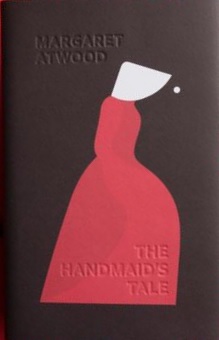
The Handmaid’s Tale by Margaret Atwood makes some interesting choices. Some of them work; some of them don’t.
As with all my reviews, I’ll be objective about the writing technicalities, and specify where I feel something is valid but not to my taste. My final rating will be an average of my objective score and my personal opinion. Spoilers are signposted.
So what is it?
short_synopsis
A dystopia where everyone is categorised and only limited groups are allowed to have sex, exclusively for procreation.
plot
This is a slow-burn. The first half of the book is spent building the world without any great urgency or drive. We’re shown how people are segregated, and what is expected of each category.
Eventually, very slowly, events ramp up, but there’s no real increase in pace or tension. Towards the end, the main character addresses her lack of agency in a slightly meta moment.
As with all dystopian fiction, rebellion is the focus, and when characters are as strictly controlled as they are in this world, small acts of rule-breaking are huge. Still, the finale lacked drama.
SPOILER BEGINS
After the “end”, there’s an extra chapter written as a talk by an historian in the far future, looking back on how this record of events (the book) came about. It’s an interesting idea but I’m not sure it added much beyond the reveal the structure did not last.
SPOILER ENDS
people
Written in first person past tense, we are in the mind of the central character. This naturally brings us closer to that person, but struggles to give us a sense of what the other characters are thinking and feeling. The story’s societal restrictions on communication make this even more difficult.
This was likely intentional by the author, as it emphasises the loneliness and isolation of the main character, and by extension gives us a sense of it. It makes the book more experiential than informational, which may not be for everyone.
place
Whilst the world is richly drawn and well described, it didn’t feel real or even plausible to me.
Considering the extreme conditions everyone is expected to live under, I find it difficult to believe this could ever have been implemented. A monumental trigger would have been required for people to fall in line like this without riots, and it didn’t feel earned.
Additionally, the penalties for not conforming always felt too removed to warrant the fear they caused.
These factors, along with the writing style, blunted the impact of the message for me.
prose
The writing style felt quite distinct from other books I’ve read recently. The sentences were usually quite short, and metaphors were delivered with a short punch rather than a long flourish. It made the story feel otherworldly or dreamlike, and I’m torn over whether this was a good thing or not. If this was meant as a warning, as dystopias often are, then I felt this style detracted from the sense “this could happen”. But I did enjoy it, and there were some lovely turns of phrase.
conclusion
I find it difficult not to compare this to Orwell’s classic, 1984. The writing style of The Handmaid’s Tale is arguably superior, but as mentioned above, the dreamlike quality, and unearned obedience of the characters, undermine any attempt to be foreboding. The sense “this could happen”, or even “this is happening”, plus the intimidation of Big Brother and Room 101, of which there are no strong equivalents in this, are what keeps 1984 ahead for me.
Failing to reach that high standard doesn’t make it bad, and I enjoyed the reading experience enough to add the sequel to my wishlist. I’m not sure who I’d recommend this to, though.
My score: 3 out of 5
A list of the book reviews posted to my blog is here.
 Arrowmaker Books