
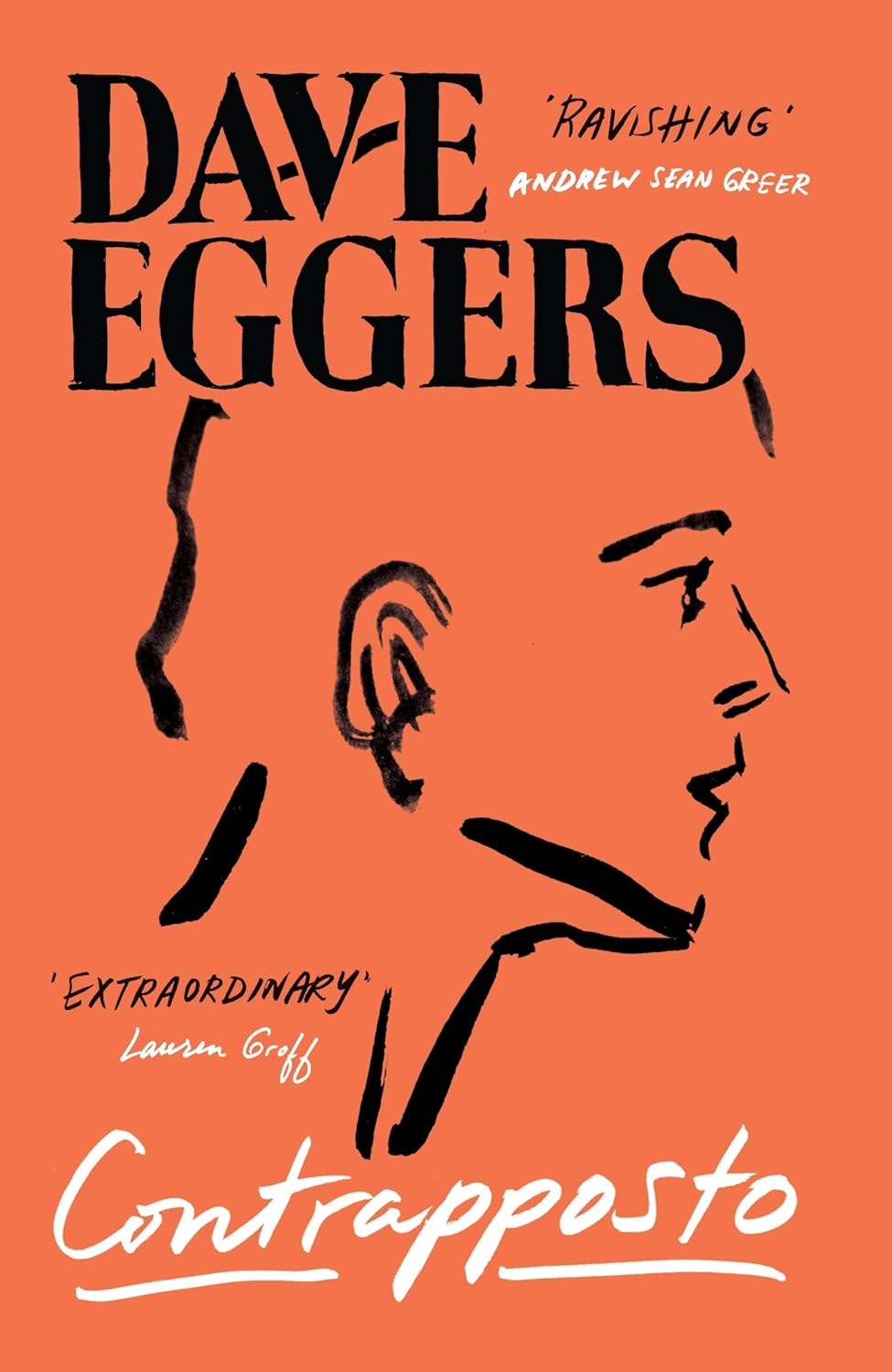
The relationship at the core of Contrapposto by Dave Eggers is a metaphor for the artistic purity vs commercial success debate, but how do you write a finale for a book based on a battle that has no end?
As with all my reviews, I’ll be objective about the writing technicalities, and specify where I feel something is valid but not to my taste. My final rating will be an average of my objective score and my personal opinion.
There are no spoilers in the review, but there are spoilers in the art vs business section at the bottom.
So what is it?
short_synopsis
A boy, Cricket, and the girl he loves, Olympia, go through life, choosing over and over what art and love mean to them.
plot
The story is split into seven sections, each dedicated to a certain period in Cricket’s life, beginning as a young boy sketching with his grandfather.
He meets Olympia, a girl two years older than him, and she immediately convinces him to do something bad. He’s smitten, and thus begins a decades long back and forth on which the book is centred. Cricket wants to become a “proper” artist, and Olympia wants them to create a new artistic movement.
Cricket and Olympia are respectively Artistic Purity and Commercial Success. The push and pull, will they/won’t they dynamic, drives the story, and we’re asked throughout how it’s possible to reconcile the two sides. There are no new suggestions here, but it’s interestingly and entertainingly put across.
How do you give a gratifying ending to such a debate? With great difficulty. I found it unsatisfying; I detail why in the spoilerific art vs business section below.
people
The whole story is told from the perspective of Cricket, an introvert bouncing from mentor to mentor. Art is his escape from a turbulent home life, and he has dreams of escaping to be a great painter.
Cricket’s feelings for Olympia don’t waver, but his understanding of his feelings does change. He’s repeatedly asked to choose between his art and the fleeting attention of the girl/woman he loves.
Olympia is a bit of a mess as a person, and we only get brief glances at her backstory to understand why. I’ve read other reviews that say she’s unlikeable, and I can see why they’d think that, but for me, she was given enough redeemable features to not be detestable, and it was always understandable how much Cricket liked her.
As she represented Commercial Success, I think she’s supposed to seem attractive at first yet unhealthy to spend too much time around, and I think the author nailed it.
place
Given his problems at home, Cricket searches for somewhere to belong, so there’s a lot of travelling, with each of the seven sections being broadly focussed on one new place. Every main location is distinctive and well painted without long paragraphs of description.
There’s barely any mention of the wider world, so it can be difficult to keep track of what time period we’re in as we hop from section to section, Olympia’s fashion choices and their ages usually being the only metrics. The occasional quick line about a big event would have grounded us and added depth, especially if it had been relevant to the theme.
prose
This is an enjoyable read. The description is mostly efficient, vivid without spending too many lines, much like the sketches that appear sporadically throughout. But there are some occasions where the description goes deeper to describe how places, people, and items look by how an artist breaks down the shapes and colours, and these were a nice touch.
conclusion
This book is destined to be popular with critics because it’s all about living a creative life. It reminded me a little of Tomorrow and Tomorrow and Tomorrow by Gabrielle Zevin, which I enjoyed and rated 4 out of 5.
My biggest issue with this book was the ending. I don’t know how else it could have ended – see art vs business below for more on that – but I still found it unsatisfying. Readers who ignore (or don’t notice) the metaphor behind the characters, and only focus on their relationship, are sure to be happier.
If you need thrills and action in a book, this isn’t for you, but if you enjoy studies of characters and relationships, and/or are creative, this is an interesting and pleasurable read.
My score: 4 out of 5
art vs business (SPOILERS)
The relationship between Cricket and Olympia is a metaphor for the link/battle between artistic purity and commercial success.
Cricket craves Olympia (commercial success), but eventually realises she wouldn’t be good for him (or his art). He prioritises his art over her, but it doesn’t stop him wanting her too.
Olympia repeatedly tries to tempt Cricket, without making any promises about the future. She is fickle, and apparently unable or unwilling to be loyal to anyone. She takes what she wants from Cricket, teases him as to what it would be like to be with her, then discards him.
Olympia does try to do things differently from the norm, but it’s usually with the goal of getting people to take notice. She wants attention, whereas Cricket tries to avoid it; there’s a scene where Cricket’s work is being put on display and Olympia makes him attend and stay, even though he hates it and wants to leave.
Towards the end, when Cricket has retreated to a small island to copy (not forge) famous paintings for a living, Olympia is concerned he’s given up and is worried he’s going to die. The business side of any creative endeavour knows it can’t survive without the true artists taking risks and breaking new ground, for business to eventually copy, water down, and serve to the masses.
The finale puts aside the debate so it can provide an ending with the two of them together, even though neither of them seem to have changed and there’s no reason to think it would work out any different this time. In fact, they don’t even get to the argument – the story ends before they get a chance to have the “what next” discussion that resulted in a fight the last time they met.
As I see it, there are two possibilities why this might have been done:
- The author thinks there is no end to this debate, so he decides to ignore it and at least finish on a nice moment.
- This is the author’s way of showing they can coexist if they don’t fight each other.
I found it unsatisfying, but I’m not sure how it could have ended any better. If they’d had the discussion and chosen to put their differences aside, that might have been too on-the-nose.
It was a difficult story to end because, in reality, there is no end. Art vs business is a battle that’s destined to rumble on for eternity.
A list of the book reviews posted to my blog is here.

