
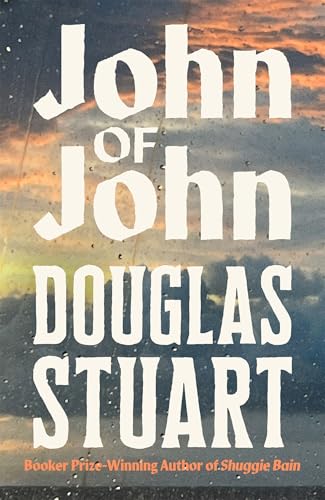
Shortlisted for the Booker Prize 2026, John of John by Douglas Stuart doesn’t do much wrong, but doesn’t do much to sparkle either.
As with all my reviews, I’ll be objective about the writing technicalities, and specify where I feel something is valid but not to my taste. My final rating will be an average of my objective score and my personal opinion.
I use the following star scale:
1 = did not like it
2 = it was ok
3 = liked it
4 = really liked it
5 = it was amazing
There are no spoilers in this review.
So what is it?
short_synopsis
A struggling young gay man is convinced to return to his island home by his devoutly religious father and is torn whether to live a quiet, repressed life with his family or spread his wings on the mainland.
plot
The story begins with Cal in a bad way. Sofa-surfing between friends, he’s lonely and unable to find work. His father, John, asks him to move back home to help care for Cal’s grandmother; that he isn’t keen despite how bad his situation is shows how much he doesn’t want to live in his family home.
Cal keeps his homosexuality a secret, but his religious father finds plenty of other reasons to be unhappy with him, and they clash. Much of the middle of the book is about them trying to find a way to get on, without an awful lot happening. Whilst I never found it boring, it was unhurried, echoing their way of life tending to sheep and weaving.
There were occasions where the plot was moved on by a character saying something out of the blue mid-conversation, which felt unnatural, especially when it was by the character whose POV we were in and there was no indication they were thinking about that topic.
The finale pulls the disparate threads together quite well, with a couple of smallish twists. Still, whilst some big decisions are made, we don’t see how they play out.
people
The three main characters feel well-rounded. The father and son both have flaws and keep secrets, and are not particularly likeable for different reasons.
Whilst most of the supporting cast are similar, the important characters are differentiated just enough to separate them from the rest.
In the backstory of one of the relationships, it’s hinted there may have been some grooming of an underage boy, but this is then ignored. The boy, now a man, clearly has issues but the reason is not explained, and the groomer doesn’t consider whether he is the cause.
place
In many ways, the island setting defines the whole book. The houses are spaced out; there isn’t much to do recreationally; and no-one has much money. The church is central to the community but there are minor rebellions by the youngest generation who feel constrained by the religious rules. Cal,, in particular, struggles against the repression.
I didn’t see an explicit reference to when this book was set, but from context clues, I assumed mid-late 1980s.
The place, the institutions, the people and their actions are presented without any bias or opinion or from the author, even when something deserved comment.
prose
Life is slow on the island, and the writing is paced similarly. It fits the story and flows well, although I don’t remember ever being struck or impressed by a passage, which may disappoint some.
It’s generally a quite easy read, except for multiple instances of the writing not being clear enough; for example, switching the point of view between paragraph breaks without specifying which character we were now following.
A decent chunk of the conversations happen in Gaelic. Some of these are written in Gaelic and then translated, but mostly its shown by the speech being in italics. Occasionally, the Gaelic is used and not translated, and I wasn’t sure if the reader was expected to have learnt the meaning by that point or work it out by context clues, or if it was intended to be left as a mystery (unless the reader knows Gaelic or looks up a translation).
conclusion
The main strength of this book is that it feels cohesive. All the facets fit together and feed into each other, and whilst none of them stand out, they add up to a greater whole. In that way, it’s slightly reminiscent of another book I read this year, The Lost Man by Jane Harper.
There are bits to like, but also bits to dislike. In the end, I don’t have strong feelings about this book so personally give it a three out of five. Objectively, it could scrape a four, but not strongly enough to push up my score.
My score: 3 out of 5
A list of the book reviews posted to my blog is here.

