
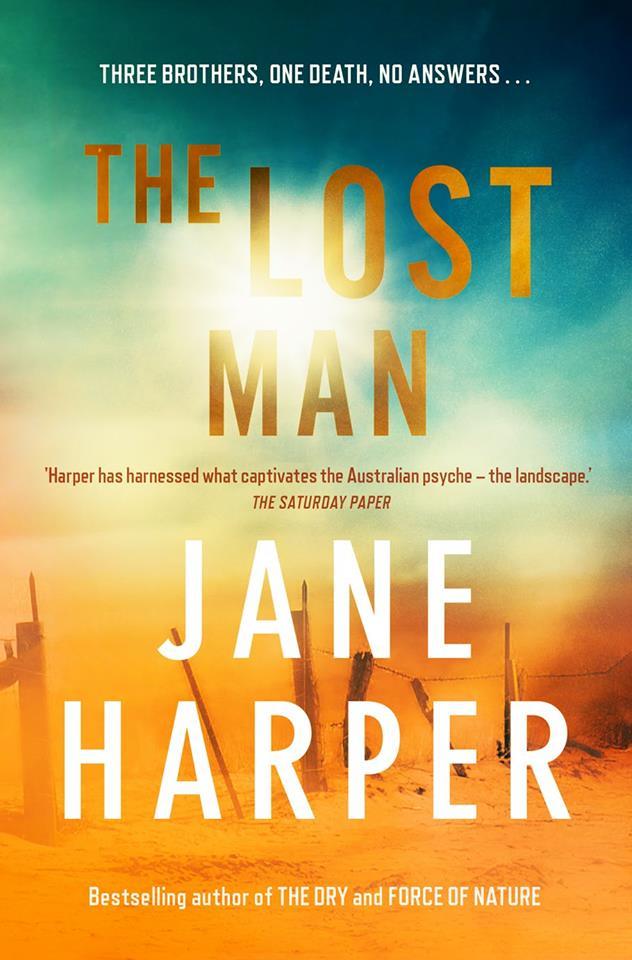
The Lost Man by Jane Harper knits together its plot, people, place and prose into a cohesive and impressive whole.
As with all my reviews, I’ll be objective about the writing technicalities, and specify where I feel something is valid but not to my taste. My final rating will be an average of my objective score and my personal opinion.
There are no spoilers in this review.
So what is it?
short_synopsis
A family seek answers as to why a local man leaves his car full of supplies and walks into the outback to his death.
plot
The mystery starts as “why would this man have walked into the middle of nowhere to die?”, but gradually we’re introduced to the idea that maybe he didn’t and that someone else may have been involved.
The how or why he died is always part of the story, but in reality it’s a character-driven piece about family relationships and that’s the main focus. It’s slow but never boring, and there’s a lot of reminiscing about how everyone ended up where they are now, filling in the backstory.
There was more than one instance of the main character finding a bit of information that “rings a bell” but he can’t make the connection, not until later when it’s convenient for the story. Such contrivances make it less plausible but aren’t so damaging as to ruin it completely.
I didn’t predict the final reveal. It made perfect sense and the last chapters satisfyingly tied up the loose ends.
people
All the characters are well-drawn, each with their own positives and negatives, complexities and secrets… although many of the “secrets” are more widely-known than they realise.
The book is written in third person from the perspective of the eldest brother, Nathan. The initial suspicion that the dead brother chose to kill himself is given extra credence by Nathan’s struggles with isolation.
The three brothers at the heart of the story have similarities, but have all reacted in different but individually understandable ways to their upbringing.
place
The location of this story is integral to it. The outback’s characteristics are woven throughout, and to set this anywhere else would have made it very different.
The family is miles from anyone or anything else, and the outback is barren, expansive, hot, and lonely. Despite all the open space, it’s oppressive due to the dangers of being caught away from shelter without sufficient supplies. The author does a fantastic job to make it feel real and a viable killer.
prose
The story proceeds slowly, as if it too is struggling to cope with the heat of the desert. It’s difficult to believe anything moves quickly in this landscape, so the pace is fitting.
I haven’t read anything else by this author to know whether this was a deliberate change of style to fit the story, or her usual style is a natural fit for this environment. Whichever, it worked.
The writing is descriptive without resorting to endless paragraphs, and it flows easily despite the slow pace.
conclusion
This is one of those stories where every facet pulls in the same direction to make the whole book stronger. Changing any one of them would only make it worse, and if that isn’t a sign of a well-written book, I don’t know what is.
It misses out on full marks for not being particularly original and feeling like a paint-by-numbers: all the right colours are in the right sections, but in some places the lines are still showing.
I’d recommend this to anyone who likes character-driven mysteries and isn’t opposed to a leisurely pace.
My score: 4 out of 5
A list of the book reviews posted to my blog is here.

