
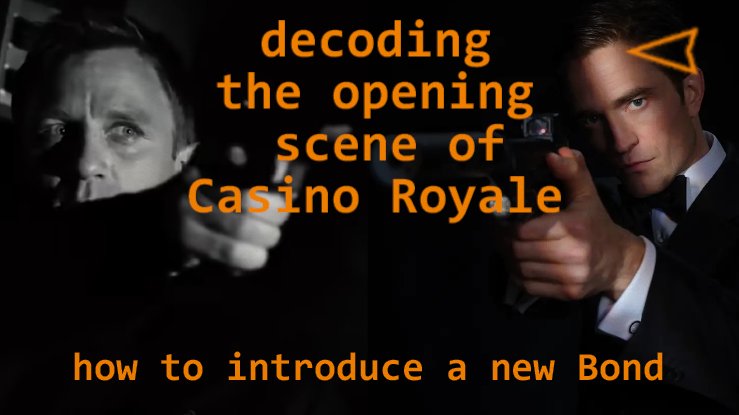
Robert Pattinson has been announced as the new James Bond.
The last time there was a new 007 – Daniel Craig in Casino Royale – they needed to wipe the slate clean of invisible cars in an action cinema landscape shaken (add your own Martini reference here) by the gritty realism of Jason Bourne.
The opening scene of the new film had a lot of work to do to distance itself from the Pierce Brosnan era but ensure Bond is still recognisable. And it did so with some interesting creative choices, a very short story-within-a-story, and a leap back in time.
Now, with another Bond reset on the way, what lessons can be learnt from how they did it last time?
The opening scene could stand alone as an introduction to Bond without giving away anything later in the film, so there are NO spoilers for Casino Royale in this piece (beyond what happens in the opening scene, of course).
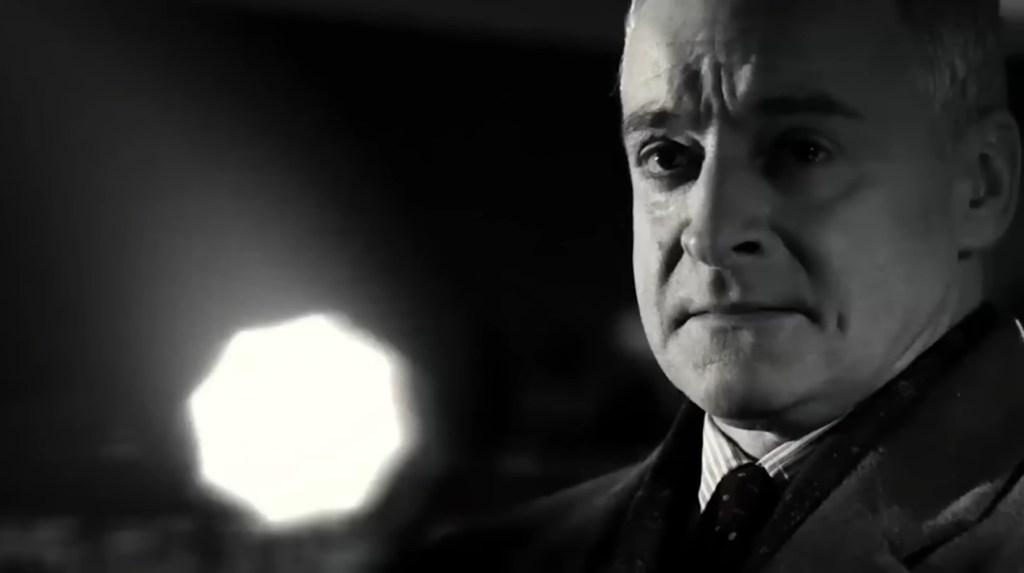
The very first shot tells us a lot and sets up a mystery.
An older gentleman, dressed smartly, steps into frame. It is night and presumably cold, given his coat and hat, and he is in a city. The camera looks up at him, suggesting he’s powerful, but he seems concerned about something, his eyes darting around as though he’s looking out for someone or something. But who or what? It must be bad to scare someone strong.
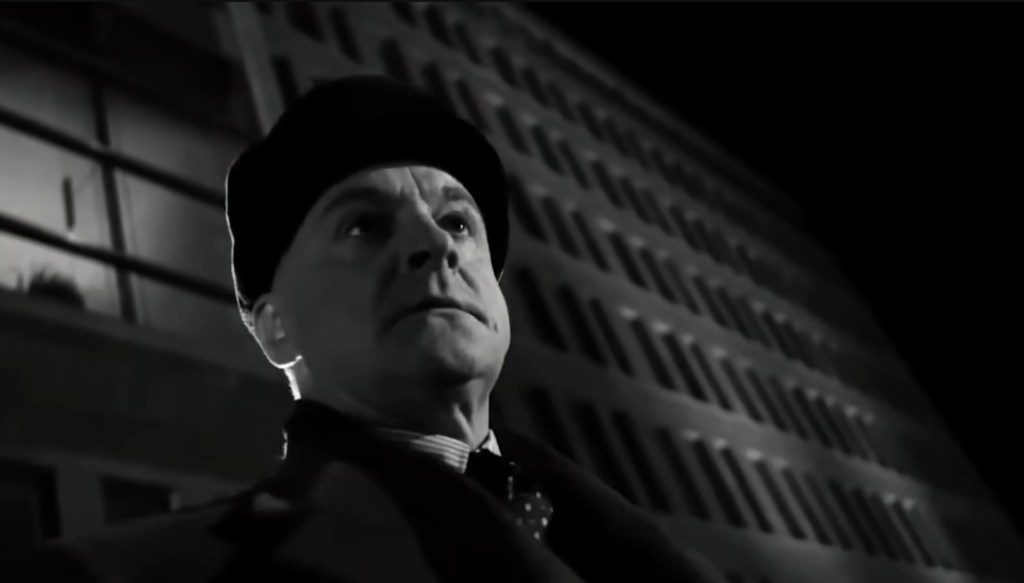
The choice to use black and white for the opening scene is very interesting.
Firstly, it’s a big step away from the glossy Bond films of the previous era. Already we’re putting distance between now and then.
Secondly, it gives the scene a noir feel, a classic spy movie sensibility. It’s dark and dangerous.
Thirdly, in harking back to older films in general, it reminds everyone that Bond was one of the originals (even if they were never filmed in black and white). There may be new kids on the block, but Bond was here first.
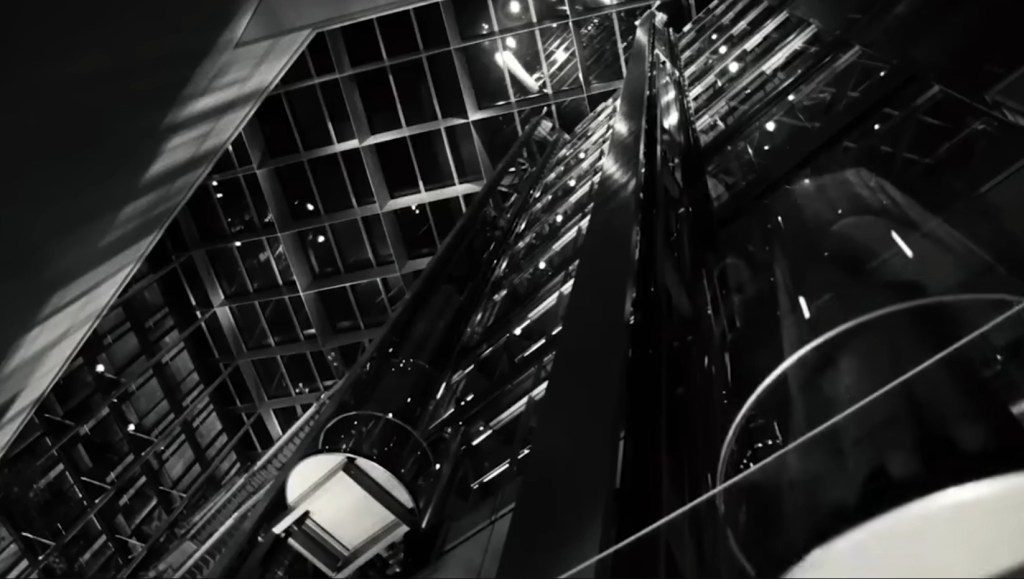
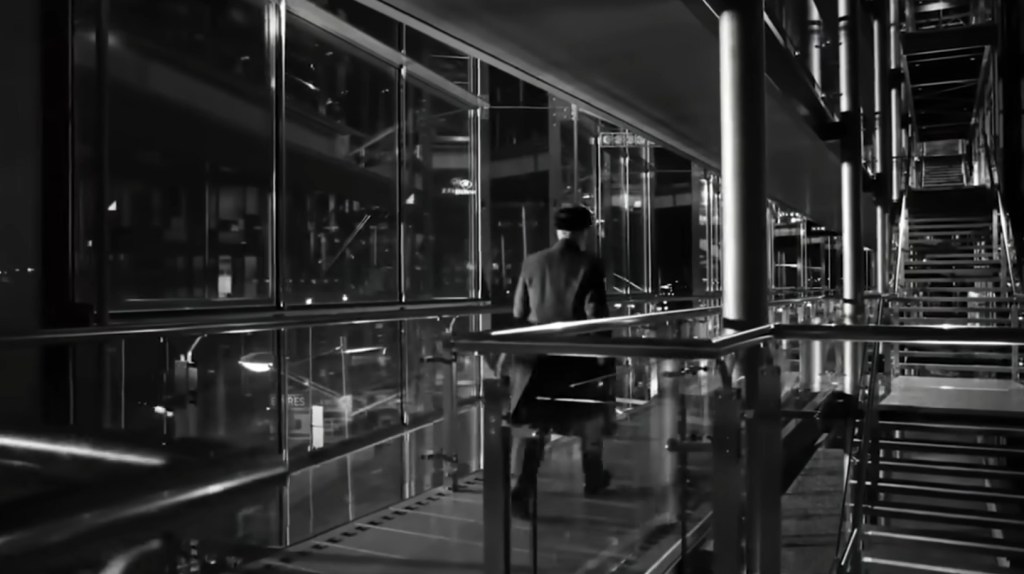
In the next pair of shots, we see an elevator going up the outside of a modern office building (showing us this isn’t taking place as far back as the black and white may suggest), and the man inside it, watching the floor numbers climb. He still looks anxious.
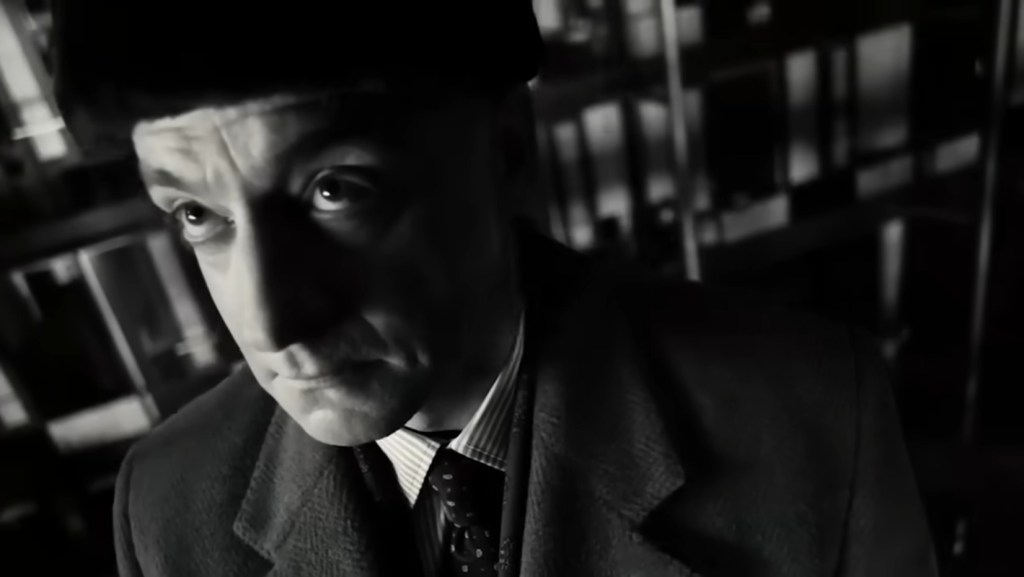
Next, we see him walk quickly through the deserted office. He’s alone, and gives the impression he perhaps shouldn’t be here. Is he hiding from something or someone?
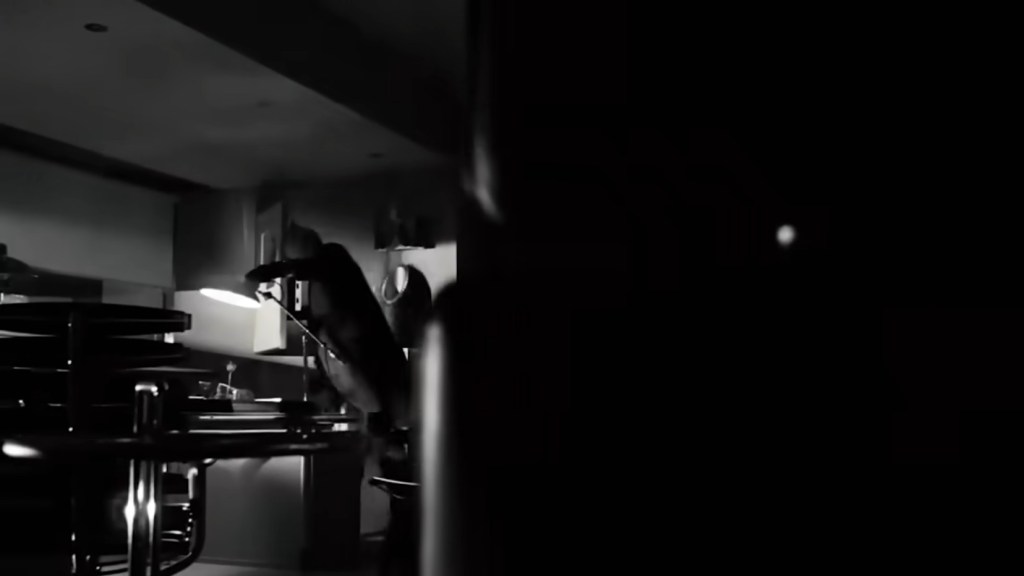
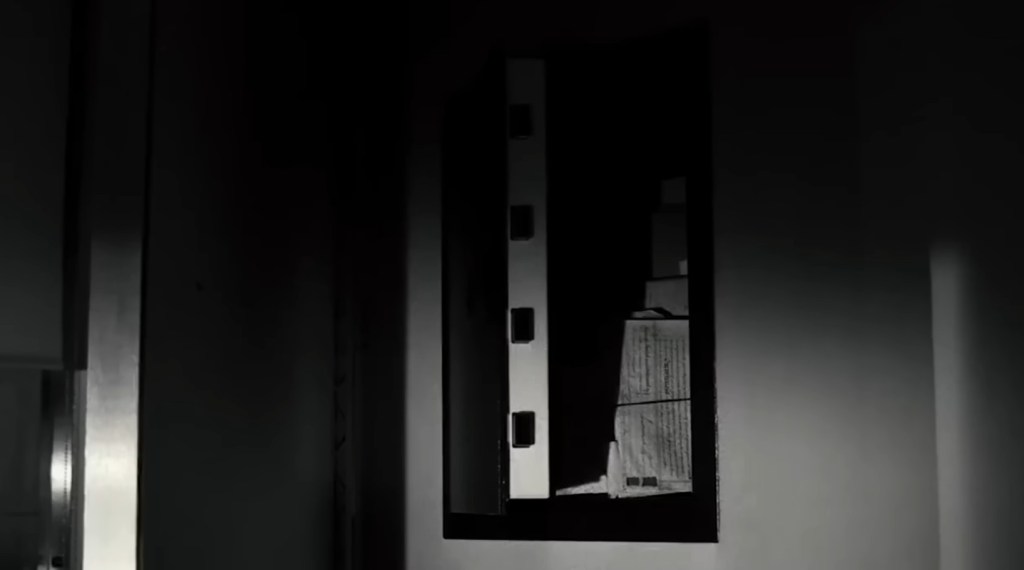
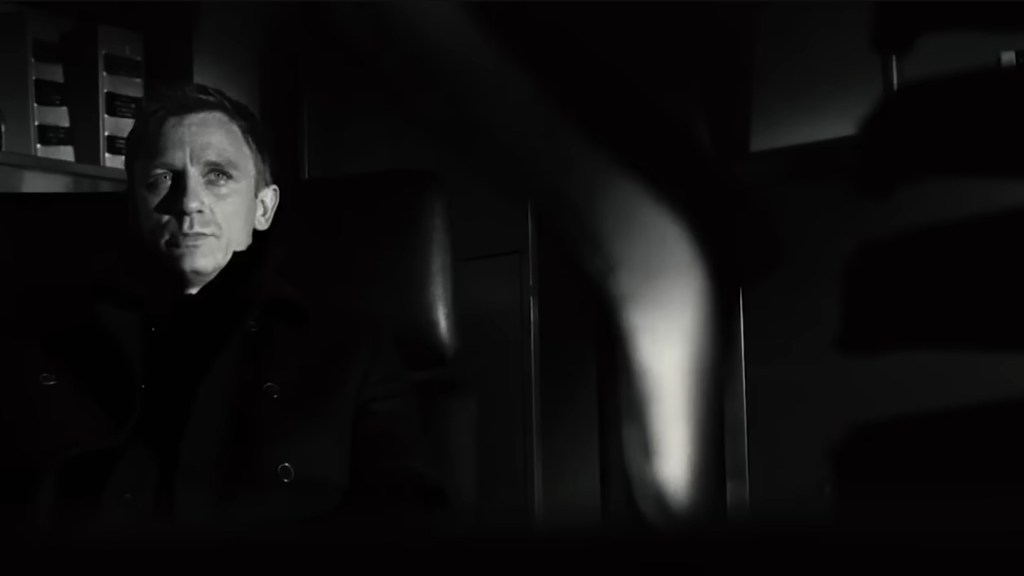
He enters his dark office, head down, and goes to his desk. We see this from the corner, and the camera swoops around to settle behind a chair, where we can assume someone is watching him from. He turns on the desk lamp and notices the wall safe is open.
This is when Bond chooses to make himself known.
BOND
M really doesn’t mind you earning a little money on the side, Dryden. She’d just prefer it if it wasn’t selling secrets.
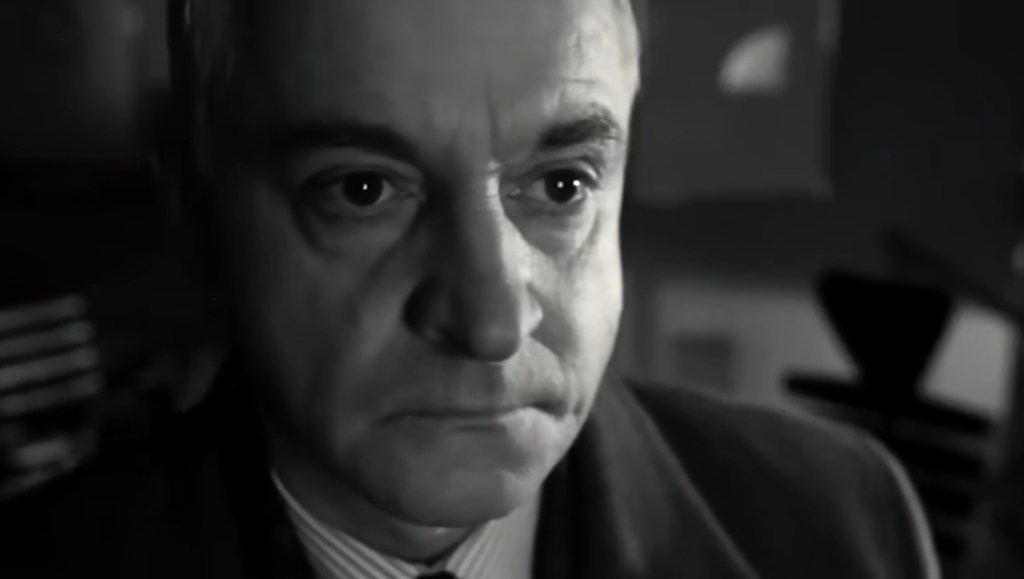
The man, who we now know is named Dryden, spins around in surprise.
James Bond is sat in the leather chair in the corner. He sounds cool and calm, as unflustered as we’ve become to expect from the super-spy.
We learn from this one line that Bond is working at MI-5, under the direct instruction of M, the boss. M is female, and she understands the realities of working with people who live in the grey areas – they’re probably going to be involved in some dodgy dealings, but as long as they don’t harm the service, she’ll turn a blind eye.
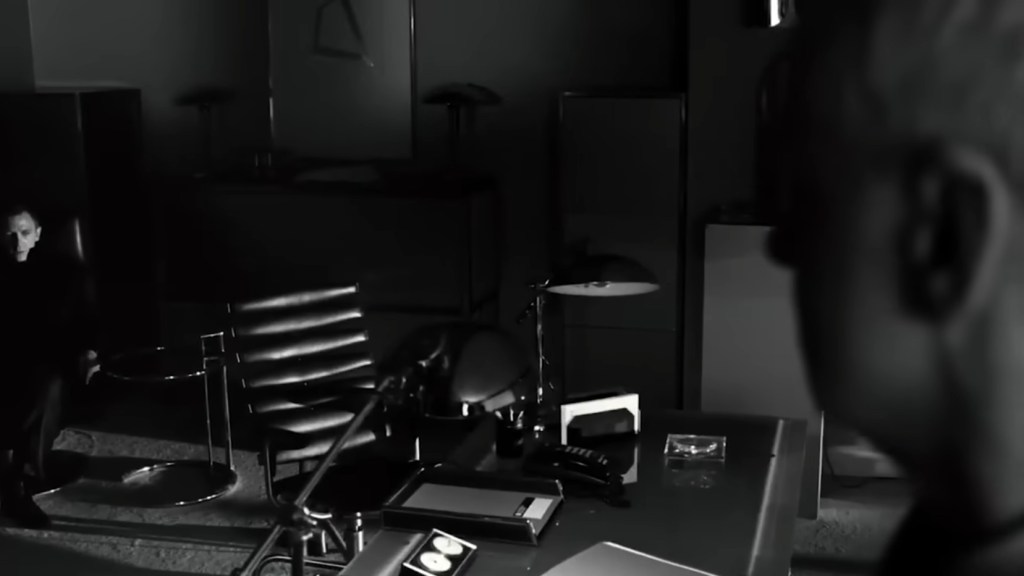
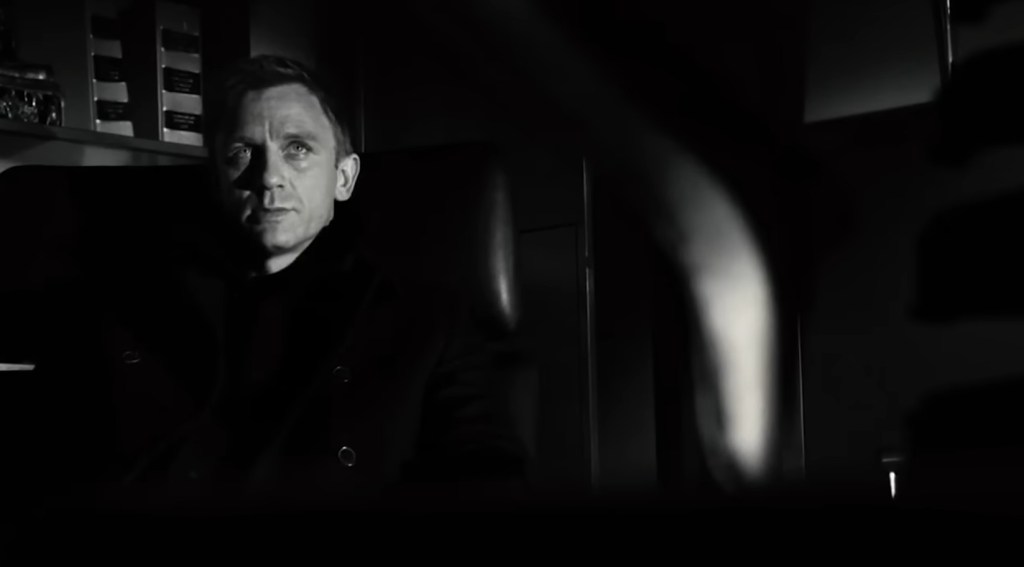
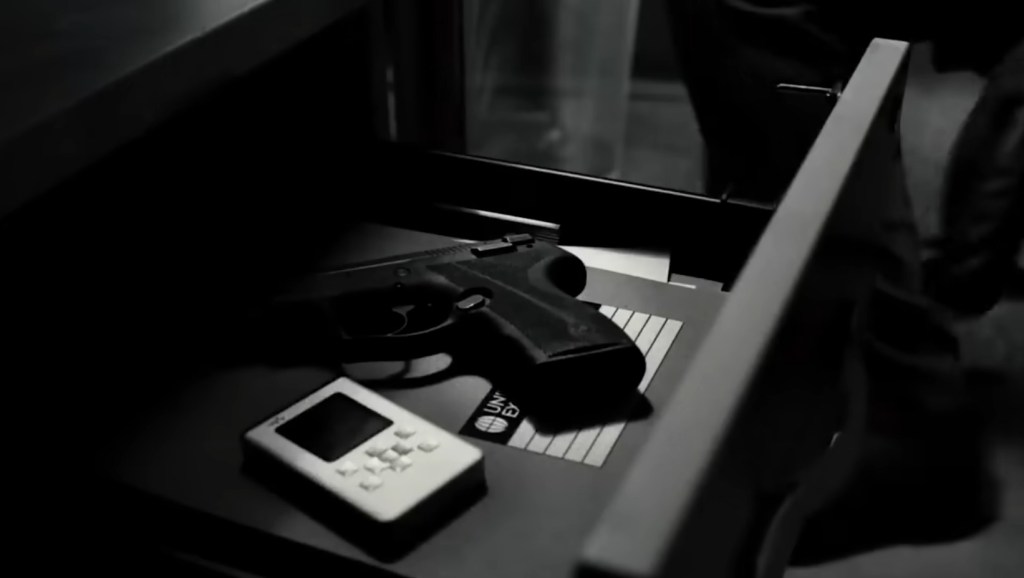
Dryden swiftly recovers his composure and moves to sit behind his desk, opening a drawer to reveal a pistol (and a bit of product placement).
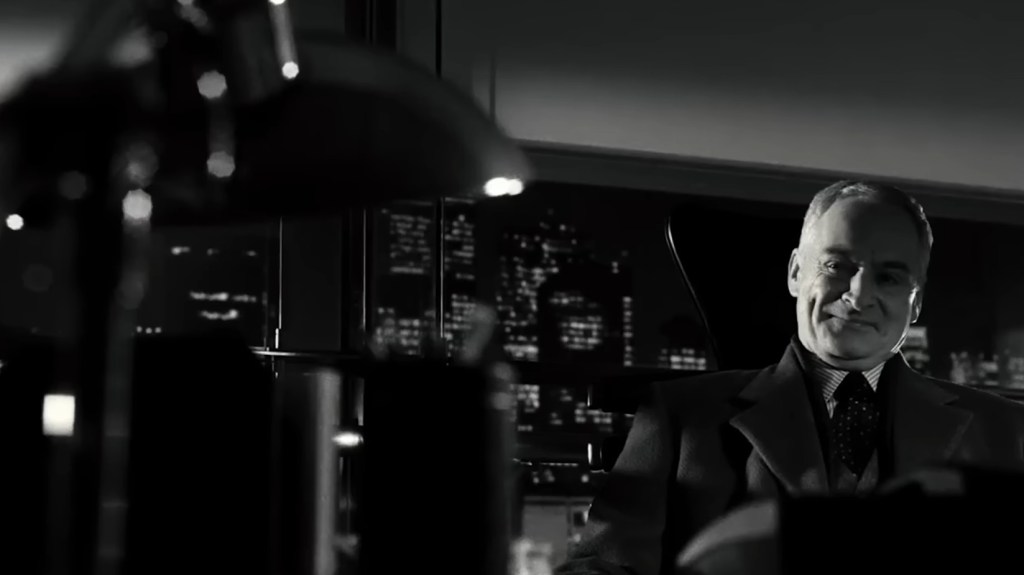
Dryden sits back in his chair, takes off his gloves, and relaxes into an arrogance that appears natural to him. He feels like he’s got the upper hand.
Arrogance and superiority like this are unappealing traits. Add these to the fact he’s been selling secrets, and we have everything we need to know that this is a Bad Guy.
DRYDEN
If the theatrics are supposed to scare me, you have the wrong man, Bond. If M was so sure I was bent, she’d have sent a double-0.
Here we learn that Dryden knows Bond and M, or at least of them. And that Bond is not yet 007.
DRYDEN
Benefits of being Section Chief. I’d know if anyone had been promoted to double-0 status, wouldn’t I?
So Dryden is quite high up in MI-5. His dismissive “wouldn’t I?” is again intended to show he believes he’s better than Bond and not in any danger.
DRYDEN
Your file shows no kills, and it takes…
BOND
Two.
Bond still sits calmly in the chair, seemingly unaware Dryden has a gun close at hand.
The need for two kills before becoming a double-0 suggests that’s what each zero represents: a kill. It’s a take we haven’t heard in previous films, most likely because Bond was already 007 before we first met him on screen, and is a nice touch. Another example of fresh thinking.
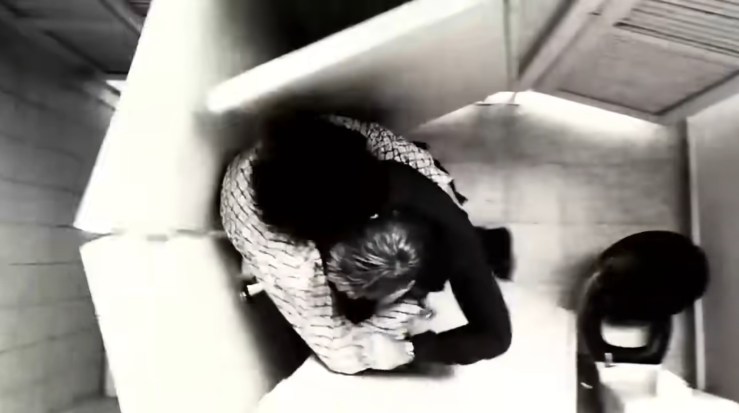
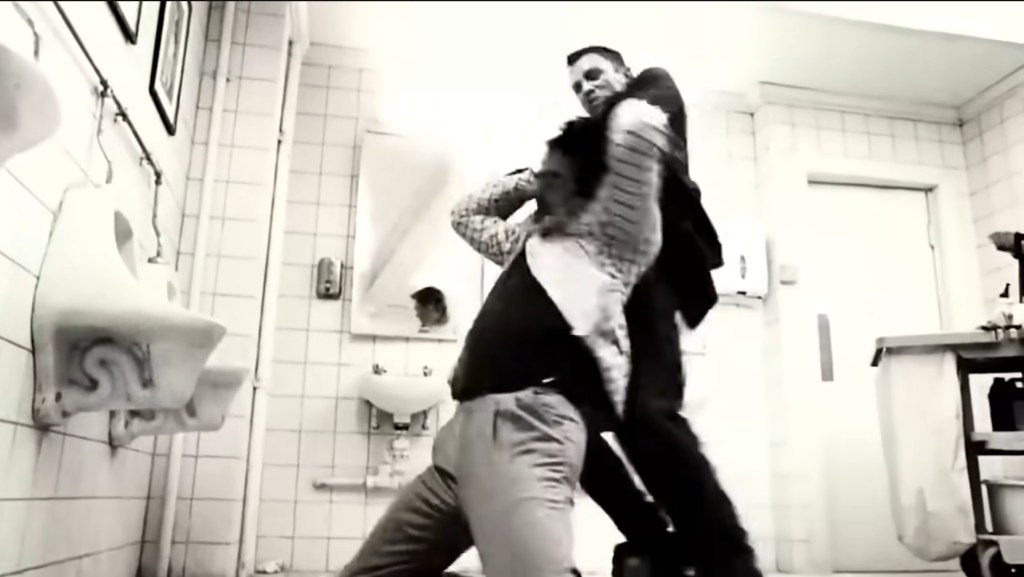
We cut to Bond fighting an unknown man in toilet cubicles.
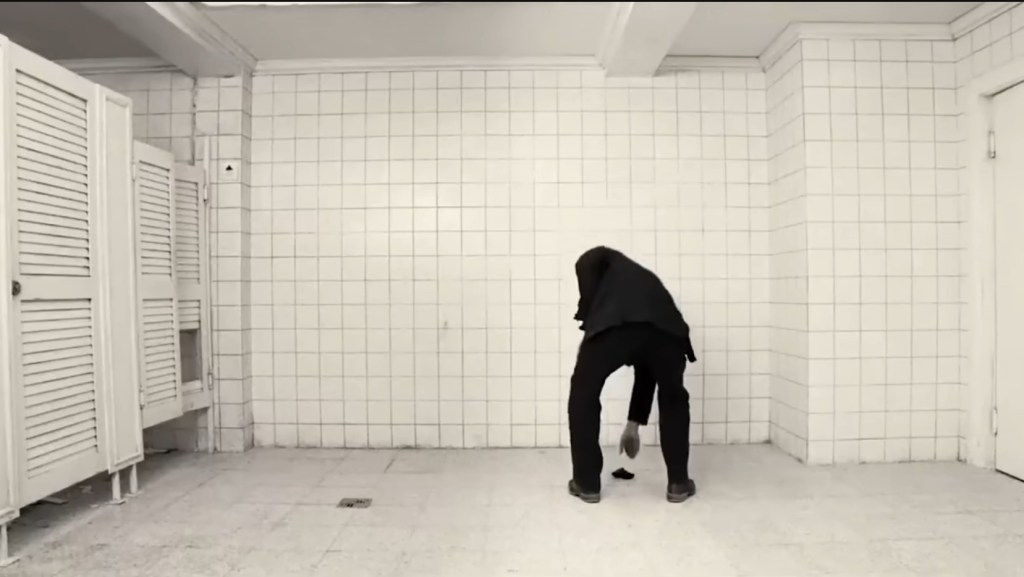
The bathroom is almost completely white compared to the black of the office we’ve just been in, and whereas the cameras were stationary in the office, they are very active during the fight, moving and cutting with the blows.
Bond is not so calm now; he almost snarls and his fighting style is very aggressive, especially as he drives the unknown man backwards through the stalls, slams him against the wall, and elbows him in the face.
He’s a blunt instrument rather than the refined tuxedo-clad spy we’ve seen in previous decades. This is our first glimpse of the real new Bond.
We cut back to the office and Dryden pulls his gun.
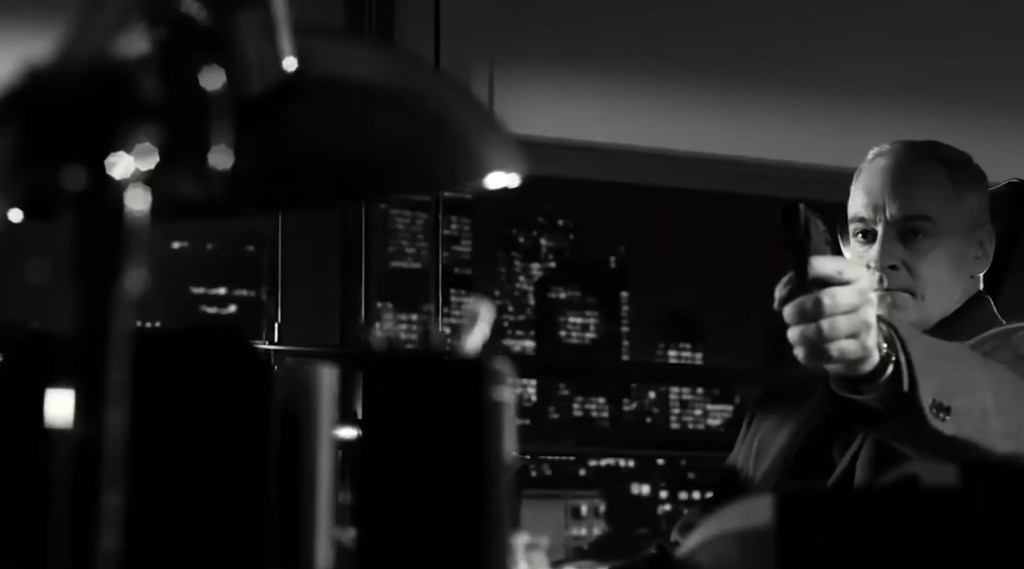
Bond doesn’t flinch.
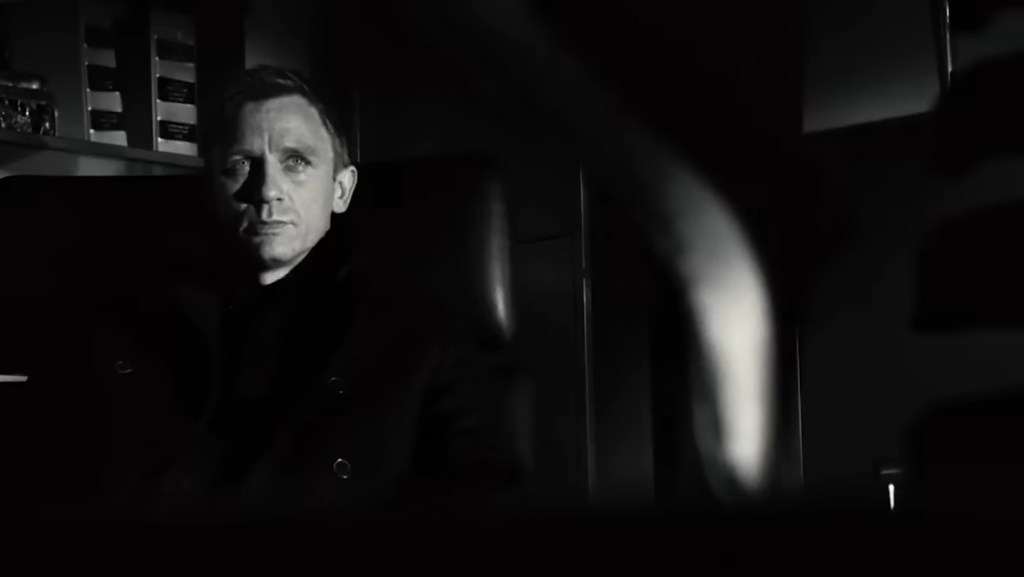
DRYDEN
Shame. We’d barely got to know each other.
He grins and pulls the trigger. Click. The gun is empty. His face falls as it dawns on him he doesn’t have the upper hand at all. He’d underestimated Bond.
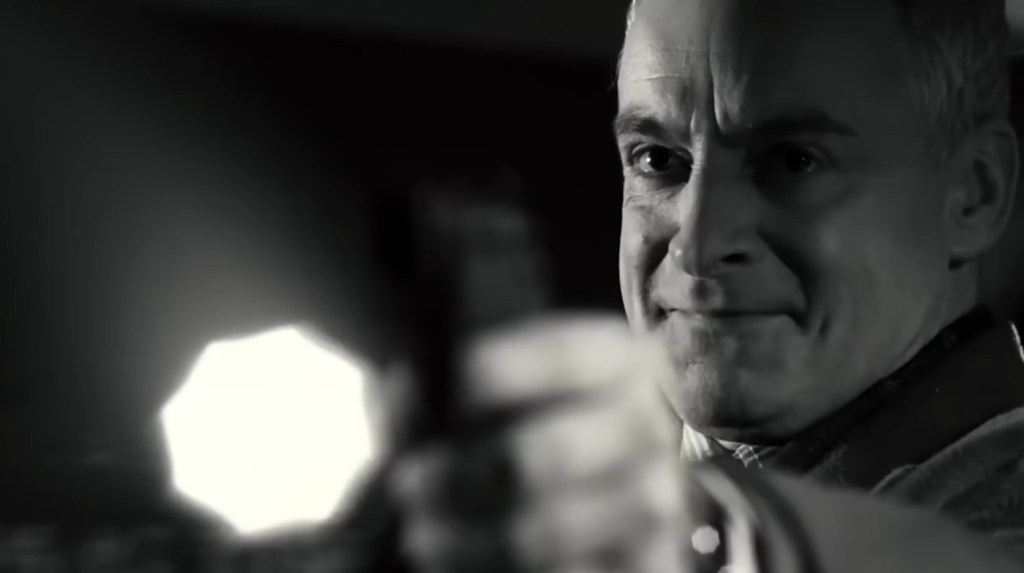
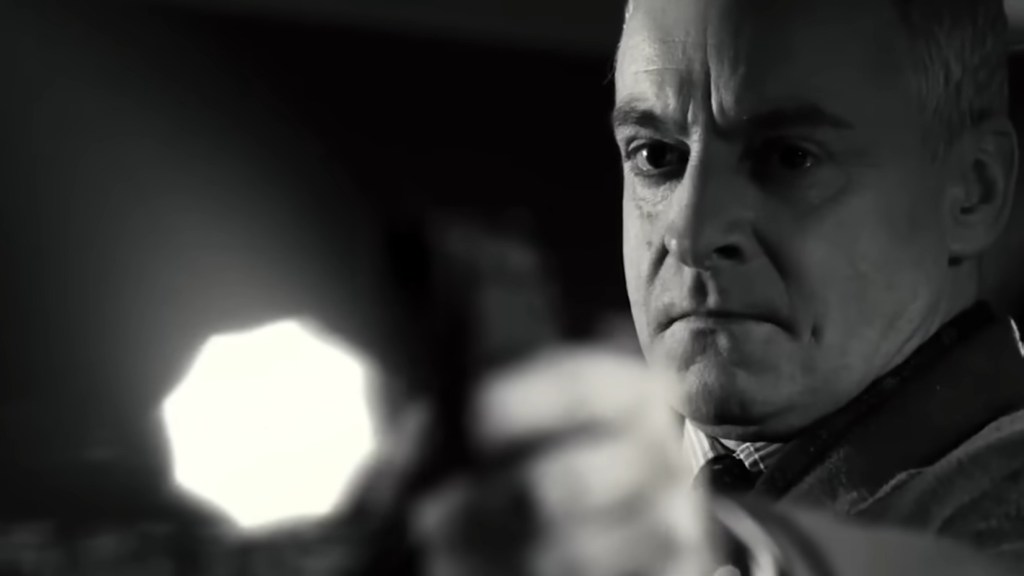
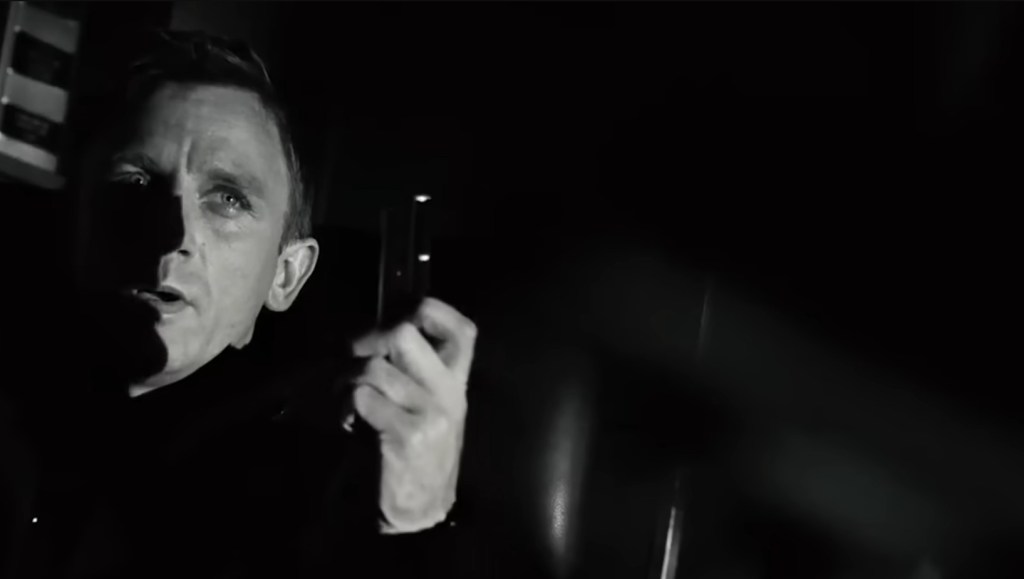
Bond holds up the clip from Dryden’s gun.
BOND
I know where you keep your gun. Suppose that’s something.
Bond was prepared. He knew he had the upper hand – he was just waiting for Dryden to show his. This relates back to one of the main features of the film: poker.
And Bond being so calm was his poker face.
DRYDEN
True. How did he die?
BOND
Your contact? Not well.
Dryden accepts the game is up. He understands now that he is to be the second kill that grants Bond double-0 status.
Just before we cut back to the bathroom fight, we understand the man Bond is battling is Dryden’s contact.
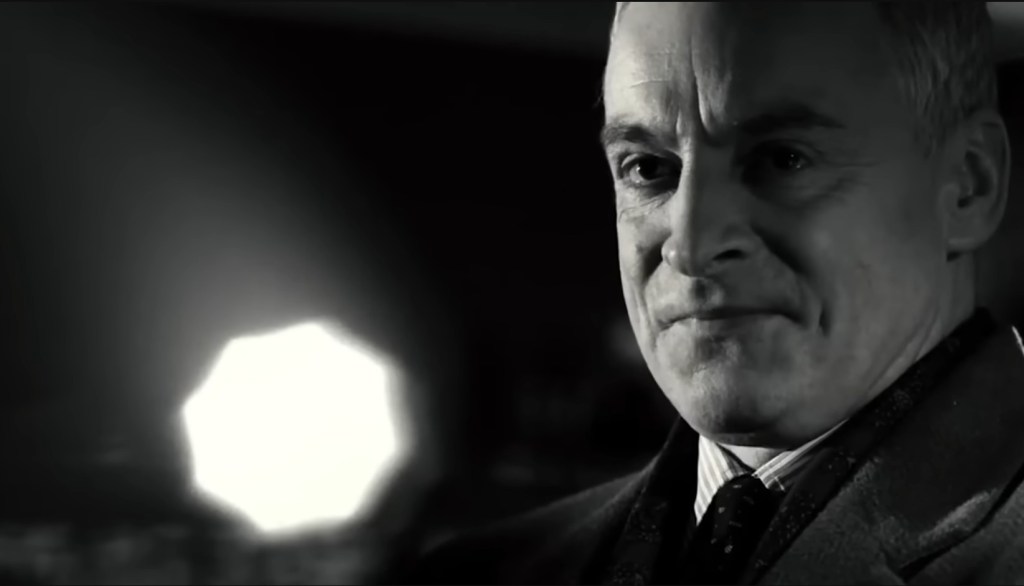
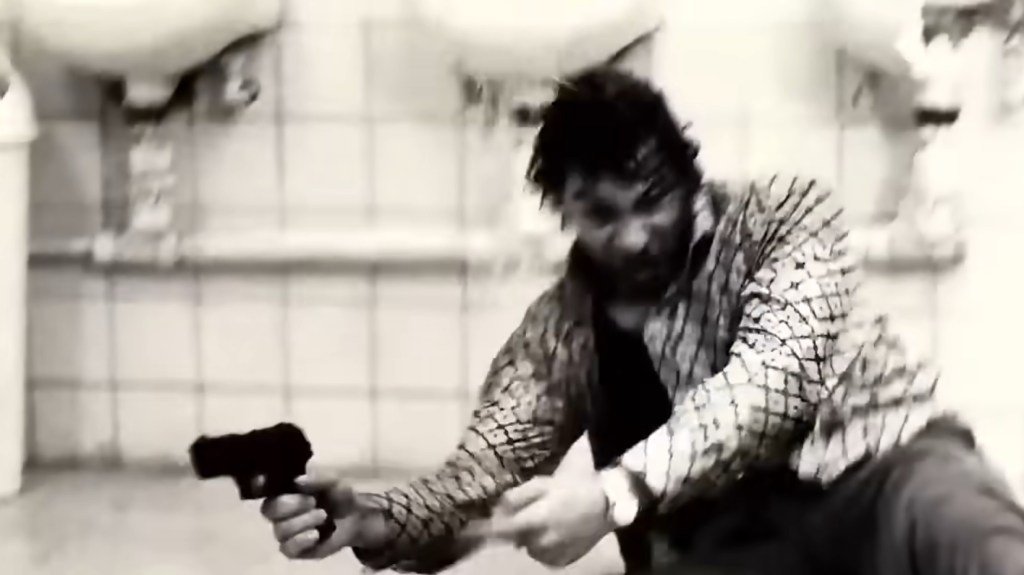
The fight, and Bond himself, is brutal. This isn’t a swift snap of the neck. Bond doesn’t pull out a gadget to help him. This is a bare-knuckle fight.
Bond finally gets a hold of Dryden’s contact and drowns him in a sink. There’s a stern determination to Bond that again we’re less used to seeing.
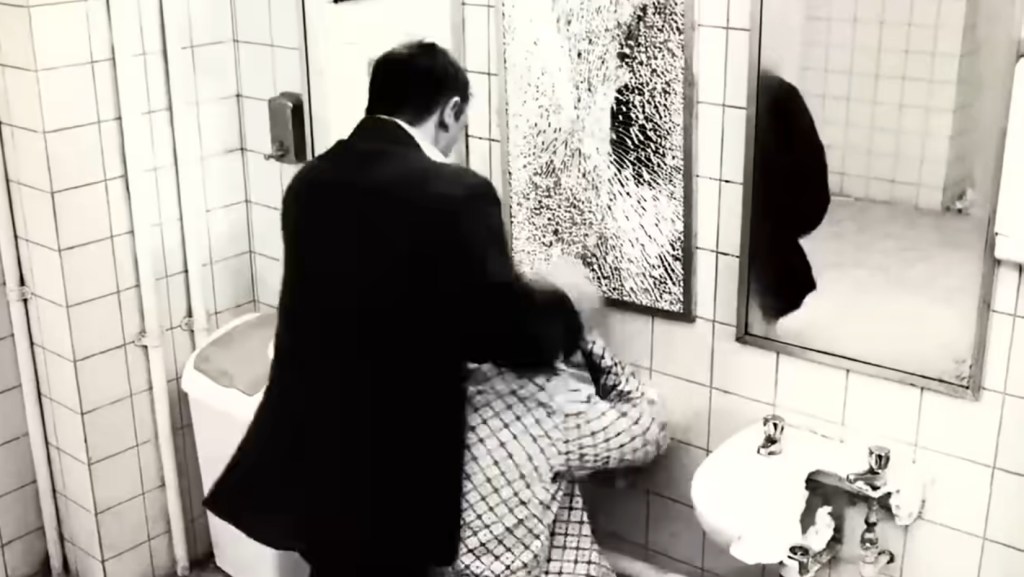
Dryden’s contact stops struggling, (seemingly) dead, and Bond drops him to the floor.
There’s a couple of seconds where Bond realises he’s just taken a life for the first time, and we can see the weight on his shoulders. But it’s only a couple of seconds – he straightens, stands tall, and displays the trademark British stiff upper lip.
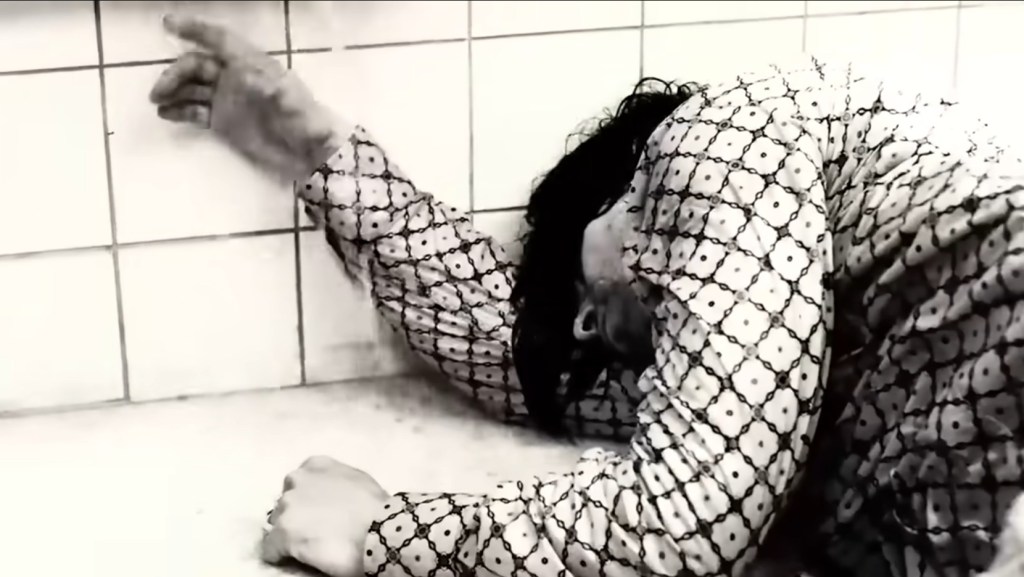
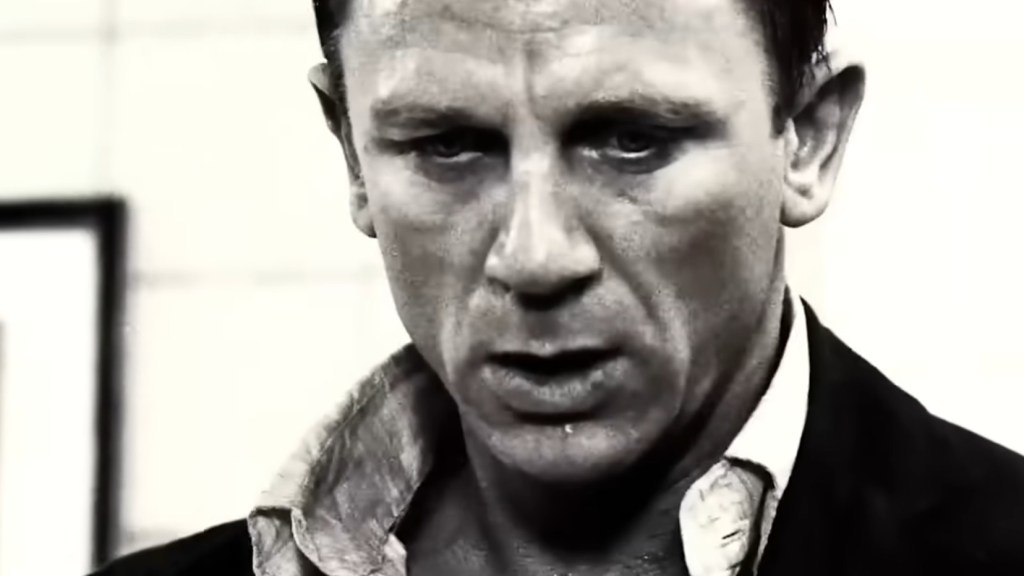
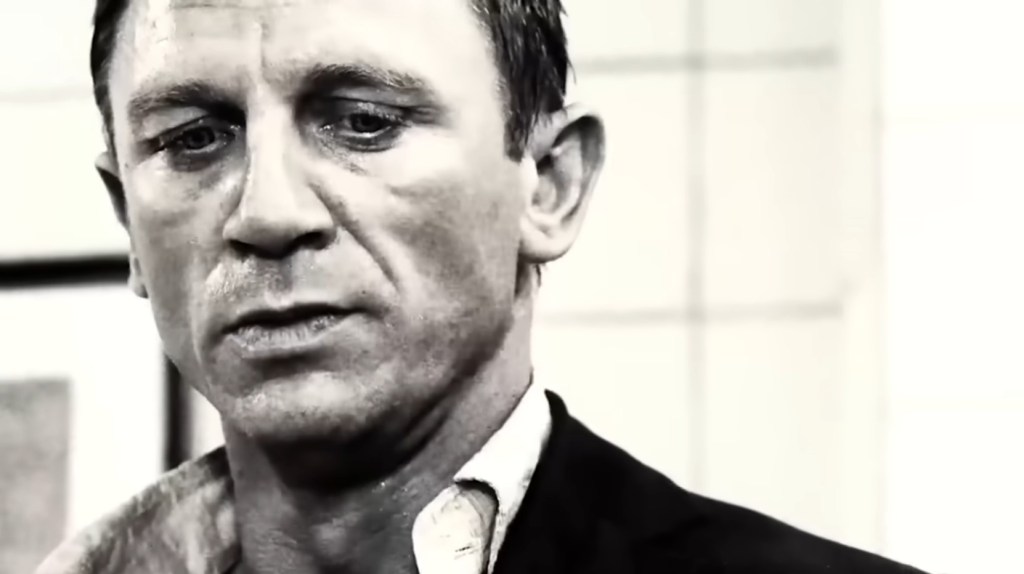
We cut back to Dryden, who can’t resist being a smarmy Bond Villain despite being in a losing position.
DRYDEN
Made you feel it, did he? Well, you needn’t worry. The second is…
Bond shoots Dryden, who falls backwards off his chair.
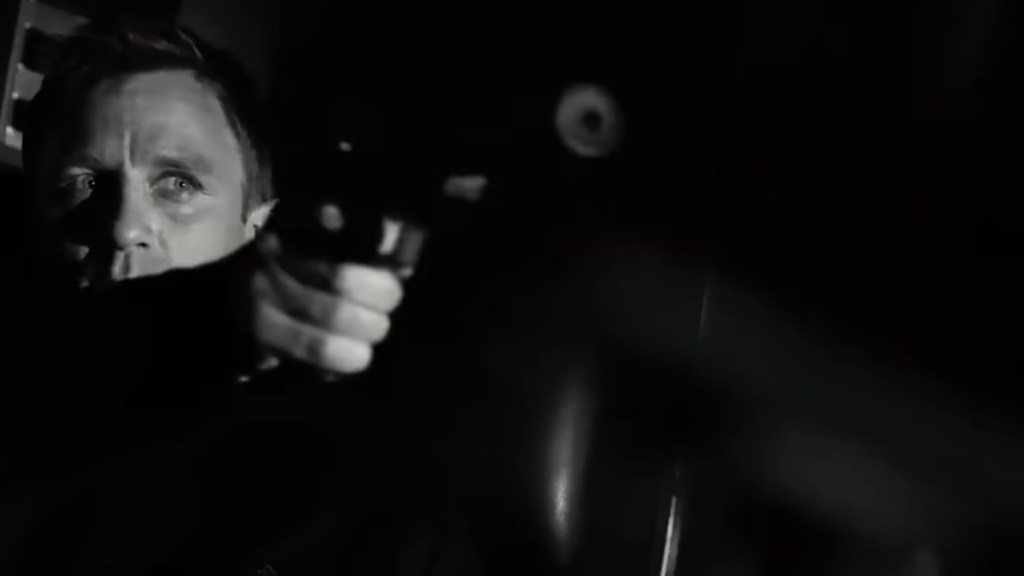
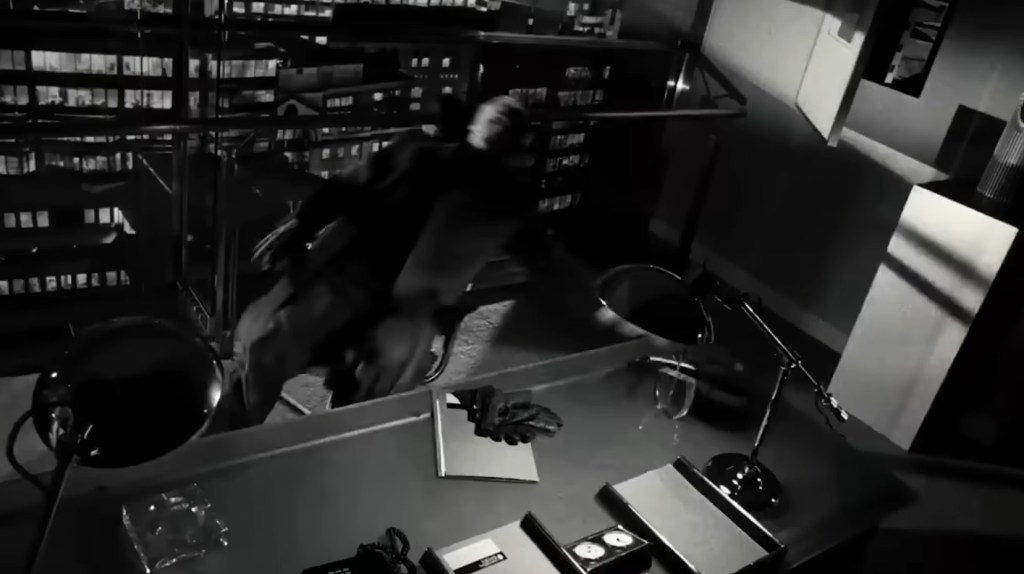
To show they haven’t changed everything with this new Bond, he delivers a cool wisecrack after killing a Bad Guy. With his second kill, he is now 007, after all.
BOND
Yes. Considerably.
He’s not wrong. That was much easier than the bathroom fight. To drive that point home, we cut back to the bathroom once more, with Bond reaching down to pick up his gun, back to the camera – and to the man he defeated.
Dryden’s contact isn’t dead (surprise!), and he scoops up the gun near him to shoot Bond.
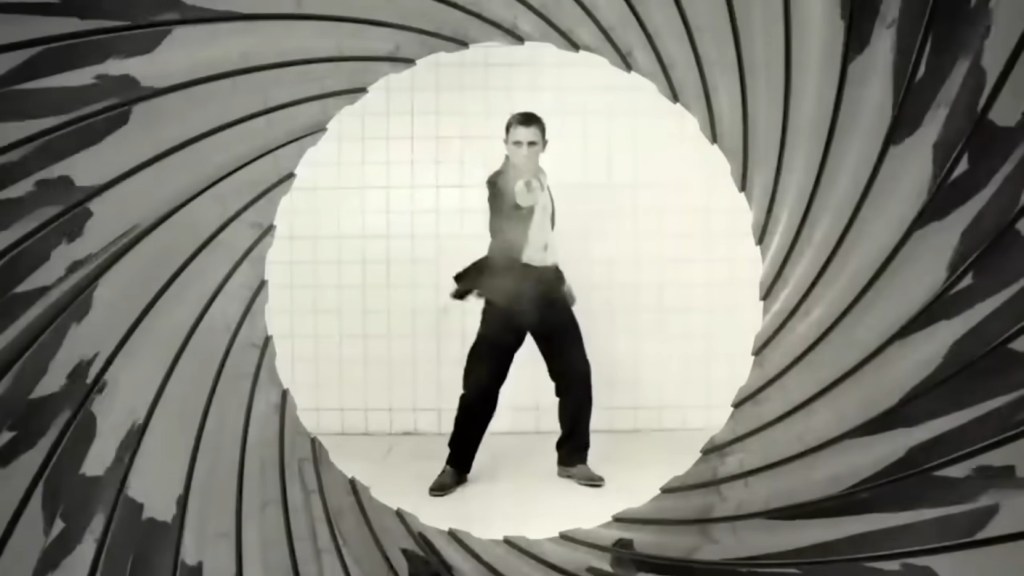
But Bond is Bond, and he neatly turns and shoots at the camera, in the pose every previous Bond film has used at the beginning, but in a new and interesting way.
If the new film with Pattinson is as creative with its introduction of Bond, I’ll be interested to see it.

