
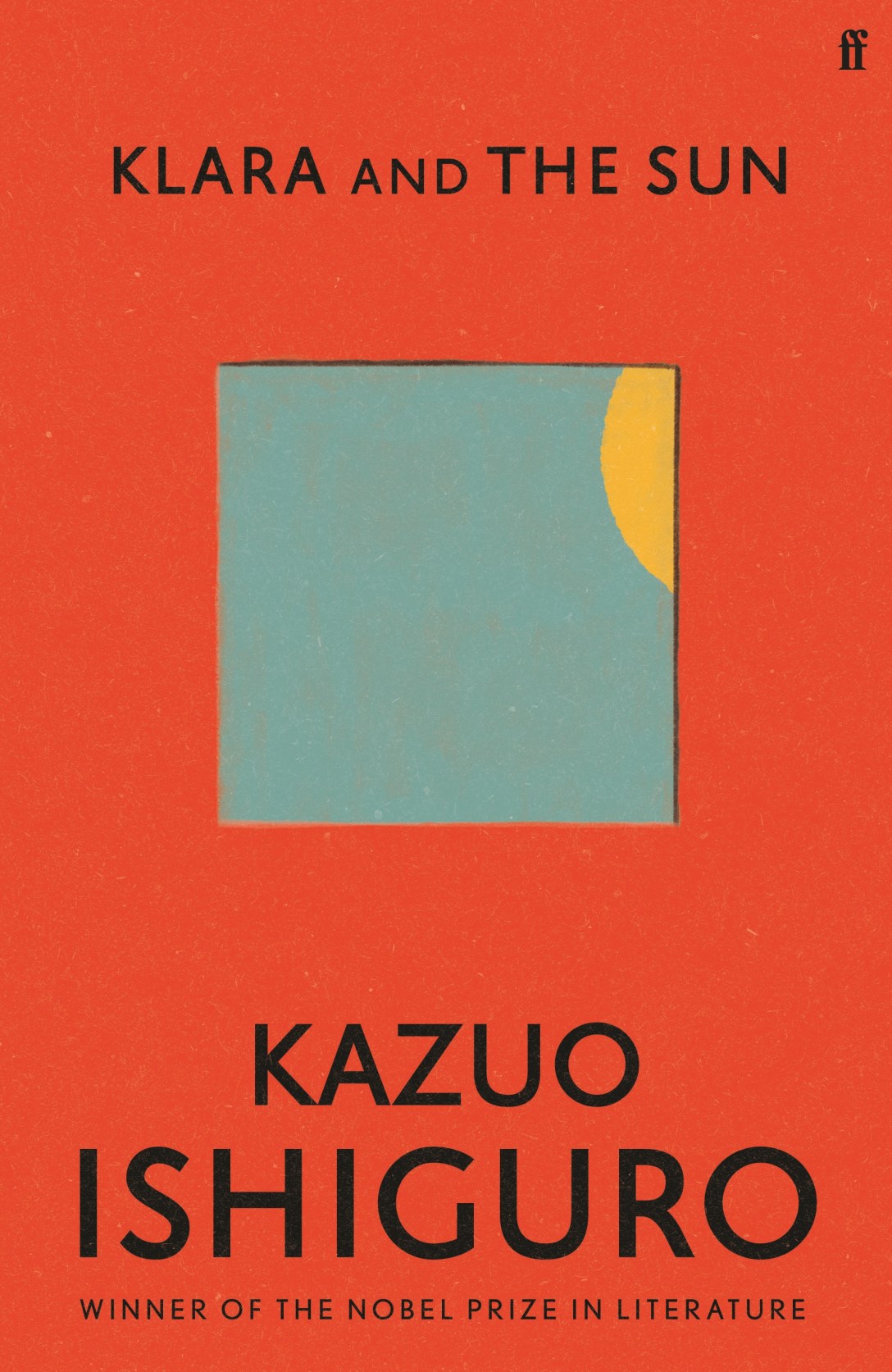
This is an odd duck. Come with me whilst I work out why I quite enjoyed Klara and the Sun by Kazuo Ishiguro.
As with all my reviews, I’ll be objective about the writing technicalities, and specify where I feel something is valid but not to my taste. My final rating will be an average of my objective score and my personal opinion.
There are no spoilers in this review.
So what is it?
short_synopsis
An android seeks to help the girl to whom she’s assigned survive a serious illness.
plot
We begin with Klara, the titular android, in a shop waiting to be purchased. The author takes his time introducing the world and showing some specific events that will make sense later, by Klara watching passively out of the window.
Eventually, Klara is bought for a girl named Josie who has an unspecified illness that can be fatal and that leaves her bedridden much of the time. Josie gets visits from the boy next door (Rick) and a doctor, and there are a couple of trips out, but otherwise not much happens.
Klara has an idea she thinks will make Josie better that is objectively bizarre, but she pursues it, and somehow manages to persuade Josie’s father (who seems to believe Klara is more intelligent than evidence shows) and Rick (who’s willing to try anything) into helping.
There is a reveal about halfway through that changes or explains some of the character motivations. It’s an interesting concept but not one I believe would be viable even in the future world that’s been setup – indeed, the characters’ debate over that point is the book’s main conflict. They all have slightly different and nuanced perspectives which fit with what we’ve seen of them to that point, and all are put across without judgement.
Additionally, the story touches lightly on pollution, social mobility, and the replacement of workers by machines.
The finale made sense within the bounds of the story, and was quite interesting, but it did end in a bit of a rush.
people
The story is told in third-person from the perspective of an android, or “AF”, that in this world are intended as artificial friends for children. Each has it’s own look and personality.
Klara, our main character, is perceptive when it comes to human emotions, but has some surprisingly simplistic ideas for a supposedly advanced artificial intelligence, and strangely believes the sun is a kind of god. Whilst this may make sense from the perspective Klara is solar-powered, and thus the sun’s energy is vital, the deification goes way beyond that need and is at times based on very shaky logic.
That may be a deliberate choice to show AI can only be basic and is unable to reason like a human; it could be a way of showing the AFs are deliberately kept childlike to better interact with the children they’re intended to befriend. The book was published in 2021, before the great “AI” LLM push, so was written without first-hand experience of “AI”‘s current failings.
Josie is emotionally mature for her age but is still susceptible to infantile behaviour, like acting differently amongst her peers and being moody.
All the human characters have their pros and cons, and are written believably. The central debate is driven emotionally as well as logically, and everyone’s opinions make perfect sense for who they are.
place
The impact of androids on the rest of the world is barely hinted at; the focus of the story is always narrow. First, we’re in the shop where Klara’s waiting to be sold, and the only view of the world is through the front window of the street outside. Then, we’re with Josie, who’s almost entirely housebound, and again Klara’s view outside is through a window.
There are vague references to being “lifted”, where only children who come from rich/influential families are given opportunities to progress. Other children need to be very gifted, and have someone influential vouch for them, to be given a chance, and this subplot is incorporated nicely through Rick.
There are also minimal references to vast swathes of the workforce being replaced by machines, but almost exclusively from the viewpoint of Josie’s father. Josie’s mother has a “high-rank” job where she could not be replaced.
prose
Klara, and therefore the telling of this story, is childlike.
The dialogue is very formal throughout, by everyone. This could be explained as Klara recounting the story and effectively over-dubbing in her “voice”, but that would be very strange.
Until I read more by this author, I don’t know if this was a style adopted for this character and this story or not.
Despite the formality, it’s not difficult to read, and everything has a nice flow to it. There are time jumps, but the pace never gets beyond leisurely; it didn’t feel like it dragged though. The descriptive passages were detailed without expanding into long paragraphs of exposition.
conclusion
Klara and the Sun is, at its core, a theoretical debate told from multiple fictional perspectives, without judgement. It has a sci-fi concept, but is very light on the science.
It provokes thought, and I enjoyed that about it. The different facets feel optimised to best serve the story, and whilst I would have preferred a little more time spent with the repercussions of the finale, it is nicely balanced and an interesting read.
The consensus amongst readers seems to be this isn’t one of this author’s best, so I’m looking forward to reading more by him.
My score: 4 out of 5
A list of the book reviews posted to my blog is here.

